Belarus as a hybrid threat actor: A Russian proxy with residual agency

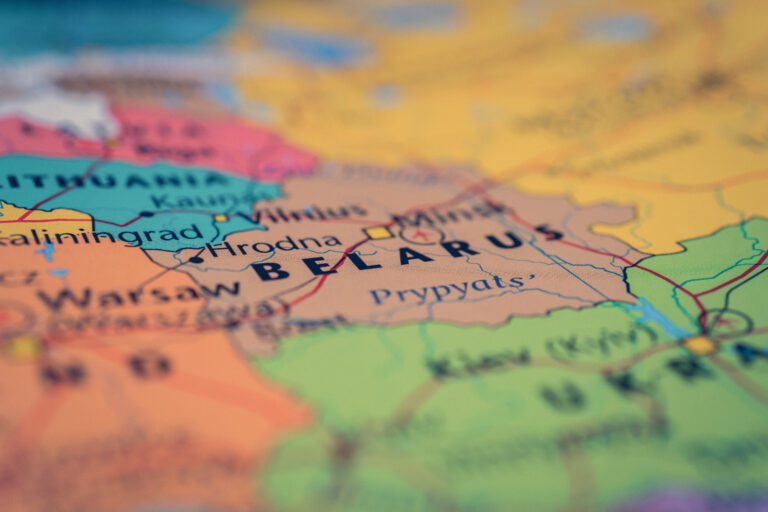
This Hybrid CoE Paper analyzes Belarus as a hybrid threat actor in the context of Russia’s war against Ukraine and the broader confrontation between Russia and the democratic world. It examines how Alexander Lukashenka’s regime employs hybrid threats as a tool of regime survival, combining repression at home with hostile activities directed at neighbouring EU and NATO states.

The paper argues that while Belarus currently acts as a Kremlin proxy and co-aggressor, it is not merely a passive instrument of Russian strategy. Rather, the paper shows that Belarus retains residual agency and at times mobilizes hybrid threats autonomously in pursuit of its own strategic objectives. These include regime consolidation through the repression of dissent, including the transnational repression of exiled opponents, and regime legitimation vis-à-vis external actors.

The paper concludes that understanding Belarus’s distinct role on the hybrid threat battlefield is essential for assessing risks on NATO’s eastern flank and for designing effective responses to hybrid threats emanating from Russia’s closest ally.

Artificial Intelligence and Foreign Information Manipulation: Chinese and Russian approaches

Rapid advances in artificial intelligence (AI) are reshaping how state actors conduct foreign information manipulation. This Hybrid CoE Paper examines how China and Russia integrate AI into their information manipulation strategies, national capability development and operational practices.

The paper shows that China’s advanced domestic AI ecosystem enables state linked actors to use AI tools for tailored content generation, large scale monitoring and targeting foreign audiences. Russia, by contrast, has more limited national AI capabilities but relies extensively on widely available tools to enhance and amplify established information manipulation tactics. The analysis highlights that both countries use AI primarily to augment rather than replace existing approaches, while emerging developments, including agentic AI, may further increase the scale and adaptability of information manipulation.

The paper concludes by outlining policy implications for the Euro Atlantic community, emphasizing cross sectoral cooperation and improved capacity to counter AI enabled hybrid influence activities.

Bracing for a cold front: Assessing Russian and Chinese strategic objectives and hybrid threat capabilities in the Arctic

The Arctic region is transforming as receding sea ice and technological progress create new access and vulnerabilities. Simultaneously, Russia and China are developing additional capabilities to support their Arctic operations and presence and advance their hybrid threat tools.

This Hybrid CoE Paper presents Russia’s and China’s long-term objectives in the Arctic, assessing how their capability, technology and infrastructure development, as well as broader civil-military cooperation, create the potential for future hybrid threats. The paper focuses primarily on civilian and multipurpose capabilities that support situational awareness, navigation and other activity in maritime and coastal environments.

A key thesis of the paper is that beyond their potential for physical operations or military use Russia’s and China’s evolving capabilities can be leveraged to establish an advantage or dominance in information, logistics, communications and data flows in the Arctic, and to create socioeconomic dependencies. The paper calls for cooperation and coordination between affected democratic countries, and cooperation with Indigenous and other local stakeholders.

Handbook on the role of non-state actors in Russian hybrid threats

Russia’s employment of non-state actors is a staple of its approach to hybrid threat operations, whether through attacks on German military and industrial facilities by individuals, sabotage of French rail infrastructure by loosely co-ordinated groups, disinformation campaigns run by private companies, or cyber operations by hacktivist collectives.

This handbook provides an overarching assessment of Russia’s approach to working with and through various NSAs across different operational domains, mapping both the empirical depth and breadth of the phenomenon. It establishes a much-needed baseline for understanding the logic behind Russia’s use of NSAs and lays the groundwork for determining appropriate measures and countermeasures at a time when operations below and above the threshold of war are on the rise.

Hybrid threats in high latitudes: Facing Russia on Svalbard

Russia’s sustained use of hybrid threat tools on Svalbard has become a defining feature of the security environment in the Arctic, where legal ambiguity, historical narratives and grey-zone actions are leveraged to pressure Norway and test Western cohesion.

This Hybrid CoE Paper outlines how Moscow blends information campaigns, coercive signalling at sea, symbolic gestures and surprise visits to challenge Norwegian authority while remaining below the threshold of open conflict. To counter this, the paper recommends a twofold strategy of deterring Russian hybrid threats while building resilience in Norway. This includes investment in enhanced institutional defences, public awareness campaigns, strengthened international cooperation and support for independent editorial-led media to resist information manipulation.

Turning strategy into praxis: Lessons in hybrid threat deterrence

The expanding hybrid threat landscape requires a rethinking of deterrence, even if its fundamental principles remain unchanged. This Hybrid CoE Paper examines lessons learned from deterrence tabletop exercises conducted between 2020 and 2023, emphasizing the value of a whole-of-government approach that combines diverse capabilities and perspectives. The paper warns against the misuse of entanglement strategies with large, aggressive, norm-defiant actors, while acknowledging their potential effectiveness with smaller or norm-adherent adversaries. It also cautions that overreliance on resilience and escalation avoidance, driven by shared democratic norms, can invite exploitation by hostile actors. For EU and NATO members, the findings underline the need for balanced strategies that combine resilience-building with credible cost imposition, informed by a deep understanding of adversaries’ cultural norms, motivations, and vulnerabilities.

Social identities and democratic vulnerabilities: Learning from examples of targeted disinformation

The exploitation of identity politics, amplified by today’s interconnected information environment, has become a powerful weapon against inclusive democracy. This Hybrid CoE Paper discusses the intersection of social identities and hybrid threats, presenting case studies from Germany, France, Sweden and beyond to illustrate how hybrid threat actors manipulate ethnic, religious, gender and socioeconomic identities. The paper highlights how false narratives spread rapidly, challenging authorities and exposing underlying grievances, such as prevailing inequality and structural injustice, which weaken societal trust. To mitigate these threats, the paper suggests that states should promote long-term cohesion by ensuring equitable access to the democratic system and by building intersocietal trust between communities and democratic institutions.

Countering state-sponsored proxies: Designing a robust policy

Hybrid threat attacks using non-state actors (NSAs) as proxies are growing in number and intensity. This Hybrid CoE Paper examines how states should approach the development of strategies to counter these attacks, which seek to destabilize European democracies and undermine the rules-based international order. To design functional policy solutions, the paper applies previous work on deterrence developed by Hybrid CoE to the problem of state-sponsored NSAs. 

Cross-cutting technologies in Chinese space activities: Raising the risk of hybrid threats

China’s use of AI and quantum technologies in its space capabilities increases its potential for coercive and aggressive operations. This Hybrid CoE Paper addresses China’s use of such cross-cutting technologies as part of hybrid threats in space, and emanating from space. The Paper also examines the implications for NATO and EU member states in the event of hybrid threats to their space capabilities.

Hybrid CoE Paper 21: China and space: How space technologies boost China’s intelligence capabilities as part of hybrid threats

Over the last decade, the People’s Republic of China has emerged as a strategic competitor to the EU and NATO, presenting a systemic challenge to the existing international order. This rebalancing of power is acutely felt in the space domain, where China has invested heavily. This Hybrid CoE Paper looks at China’s rapidly expanding space-based capabilities and their potential for misuse in hybrid threat operations. It examines the role of space in Chinese strategy, while also providing readers with a basic understanding of Chinese intelligence-gathering capabilities. It concludes by considering the implications of these developments for the EU and NATO. 

Hybrid influence
Hybrid CoE Paper 30

Belarus as a hybrid threat actor: A Russian proxy with residual agency

Hybrid influence
Hybrid CoE Paper 29

Artificial Intelligence and Foreign Information Manipulation: Chinese and Russian approaches

Cover photo of the publication
Arctic region
Hybrid CoE Paper 28

Bracing for a cold front: Assessing Russian and Chinese strategic objectives and hybrid threat capabilities in the Arctic

Cover photo of the publication
Russia
Hybrid CoE Paper 27

Handbook on the role of non-state actors in Russian hybrid threats

Photo of Svalbard used on the publication’s cover.
Arctic region
Hybrid CoE Paper 26

Hybrid threats in high latitudes: Facing Russia on Svalbard

Deterrence
Hybrid CoE Paper 25

Turning strategy into praxis: Lessons in hybrid threat deterrence

Identity & cognitive vulnerabilities
Hybrid CoE Paper 24

Social identities and democratic vulnerabilities: Learning from examples of targeted disinformation

Non-state actors
Hybrid CoE Paper 23

Countering state-sponsored proxies: Designing a robust policy

Aviation & Space
Hybrid CoE Paper 22

Cross-cutting technologies in Chinese space activities: Raising the risk of hybrid threats

Aviation & Space
Hybrid CoE Paper

Hybrid CoE Paper 21: China and space: How space technologies boost China’s intelligence capabilities as part of hybrid threats

Russia
Hybrid CoE Paper

Hybrid CoE Paper 20: Ukraine’s position in Russia’s strategic thinking: Domestic, regional and international order

Cyber
Hybrid CoE Paper

Hybrid CoE Paper 19: Legal power play in cyberspace: Authoritarian and democratic perspectives and the role of international law

Arctic region
Hybrid CoE Paper

Hybrid CoE Paper 18: The Arctic after Russia’s invasion of Ukraine: The increased risk of conflict and hybrid threats

Instrumentalized migration
Hybrid CoE Paper

Hybrid CoE Paper 17: Instrumentalized migration and the Belarus crisis: Strategies of legal coercion

Maritime
Hybrid CoE Paper

Hybrid CoE Paper 16: Handbook on maritime hybrid threats: 15 scenarios and legal scans

Cyber
Hybrid CoE Paper

Hybrid CoE Paper 15: Exploiting cyberspace: International legal challenges and the new tropes, techniques and tactics in the Russo-Ukraine War