
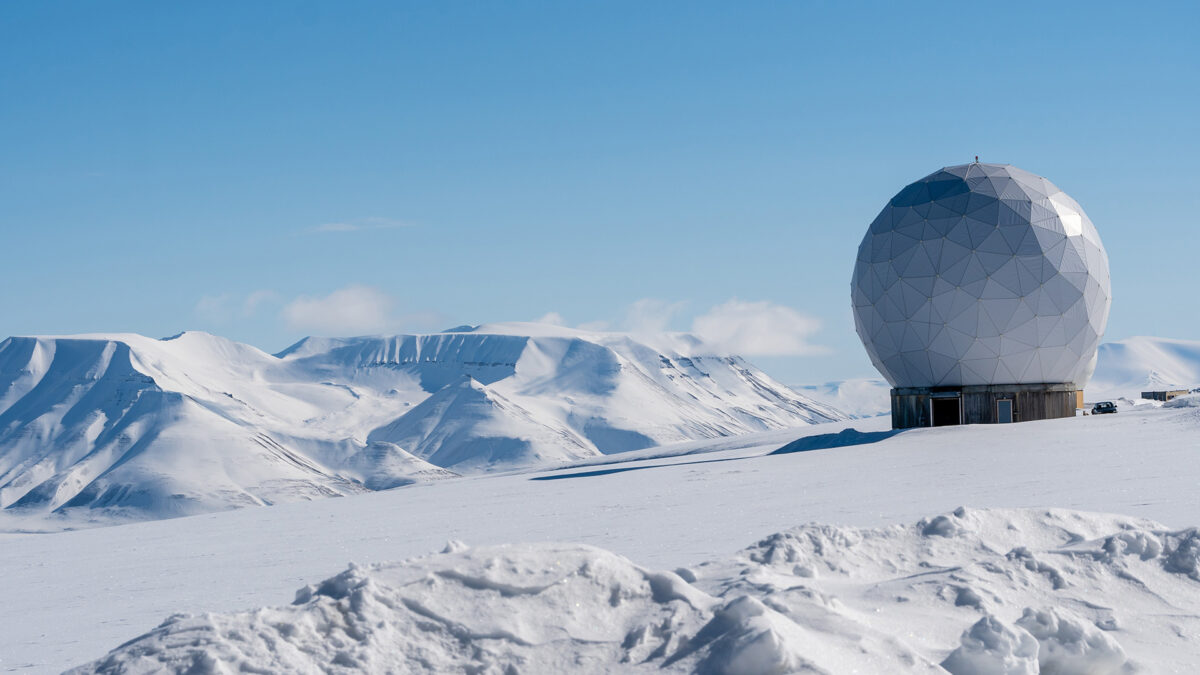
The Arctic has emerged as an arena of great power competition, prompting Western powers to reassess their posture and vulnerabilities in the area. What are the main drivers of Russian and Chinese interest in the Arctic, and why should regional and international actors pay attention to the increasing hybrid threat activity in the region?
Increasing strategic relevance
The Arctic connects the Pacific and Atlantic oceans, making it strategically important for maritime activities from naval manoeuvres to commercial shipping. The area is also key to maintaining space-based capabilities such as remote sensing, positioning and navigation, as well as terrestrial-based sensor systems and strategic infrastructure.
The Arctic region is estimated to have vast natural resources, including hydrocarbons, critical minerals and fish stocks, though many of them are difficult to access. With climate change the receding sea ice is perceived to be creating new pathways and economic opportunities for resource exploitation, but also new environmental risks and vulnerabilities.
This elevated international interest is reflected in intensifying hybrid activity in the Arctic. For example, China and Russia possess diverse and evolving means of influencing the region, including physical, cyber and electronic operations, as well as cultural influencing.
Escalating hybrid threat activity
Dr P. Whitney Lackenbauer, professor and Canada Research Chair in the Study of the Canadian North at Trent University, describes the Arctic as a testbed for modern Russian hybrid warfare.
“Russia views the European High North not merely as a geographical boundary but as a critical operational theatre where grey-zone tactics can be deployed to systematically undermine Western cohesion, challenge our northern flank and test our red lines.”

The war in Ukraine has, for the time being, reduced Russia’s military and operational capability in the Arctic, although it has maintained its nuclear deterrent on the Kola Peninsula and in the Barents Sea. Sophie Arts, who leads the German Marshall Fund’s research and programming on Arctic security and geopolitics, believes this will change as the war winds down.
“I think it’s reasonable to assume that as development and activity in the Arctic region increases, so does the potential for hybrid threats, military activity, accidents, and potential escalation.”
The Arctic is not a primary strategic priority for China but a long-term interest. Its investment activity can be seen as diversification and keeping its options open. By investing in the Arctic, China is positioning itself for future access.
Other Arctic states, however, have become aware of China’s strategic interests in recent years, limiting its capabilities of acquiring Arctic assets through direct investment. China has since shifted its focus to an approach that is more difficult to detect.
Russia–China Arctic cooperation
Russia and China share strategic interests in the Arctic, but their relationship is asymmetric, and they are not inherently aligned in their activities.
Dr Johan Schalin, a Senior Analyst at Hybrid CoE focusing on hybrid threats in the Arctic, explains that the two powers have different long-term interests but also some complementarities: “Russia has the territory and the resources; China has other resources, technology and capabilities.”
China is an attractive market for exports from Russia’s resource-rich Arctic territories. Economic cooperation between Russia and China is increasing, particularly around shipping, which heightens the risk of hybrid threats and incidents.

Key vulnerabilities in the Arctic region
Efforts to improve resilience against hybrid threats in the Arctic are severely hindered by a lack of situational awareness. “We’re seeing in the Baltic Sea how difficult it is to prove what really happened in some of the undersea infrastructure incidents and to prove intent,” says Sophie Arts.
Unlike the Baltic Sea, the Arctic does not have densely built undersea and energy infrastructure. This lack of redundancy makes Arctic communities more vulnerable to hybrid threats aimed at single points of failure.
Beyond maintaining situational awareness, the law of the sea has significant gaps where taking operational action to counter hybrid threats is concerned, posing additional challenges for the protection of maritime infrastructure.

Another challenge is Svalbard, where Russia has been escalating its hybrid threat activities since 2014. Threat actors may benefit from exploiting misconceptions about the Svalbard Treaty to cast doubt on Norway’s adherence to its provisions, which recognize full Norwegian sovereignty over the archipelago while restricting military activity.
Due to these vulnerabilities, the Arctic is at high risk of various hybrid threat activities, including GPS jamming, the use of the shadow fleet and weaponized migration.
Cooperation with Indigenous Peoples
As threat actors develop their capabilities, democratic countries should embrace a whole-of-society approach to strengthen collaboration across agencies, departments and local communities. Indigenous Peoples and other northern populations play a key role in building resilience against hybrid threats in the Arctic.
For example, Whitney Lackenbauer says that the knowledge of Indigenous Peoples can be fused with data from other sensors. He highlights the Canadian Rangers, a northern military force composed mainly of Indigenous community members, as a model for improving situational awareness in the Arctic.
Sophie Arts notes that fostering resilient communities in the Arctic requires investment and collaboration. Indigenous Peoples’ needs and priorities must be addressed to avoid creating new vulnerabilities.
Global significance of the Arctic
Recent years have seen a recognition of the Arctic as a key strategic region, particularly for the maritime, air, space, and digital domains.
Despite its challenging conditions, the Arctic may become increasingly relevant for global trade as northern passages reduce dependency on vulnerable chokepoints. As activity and competition grow, so will the potential for escalation and hybrid threats.
“We used to think that the Arctic was exempt from geopolitical tensions. There’s a broad consensus, at least in the security community, that there isn’t much left of that Arctic exceptionalism,” says Johan Schalin.
The article is based on an event organized by Hybrid CoE in September 2026.