
Election systems are part of democracies’ critical infrastructure and must therefore be safeguarded. For democracy to function legitimately and effectively, elections must not only be conducted properly but citizens must also have genuine confidence in them.
In recent years, many countries have faced a growing number and range of hybrid threats aimed at undermining trust in elections and impeding the smooth running of electoral systems. Why is this occurring, and what actions can governments take to address the situation?
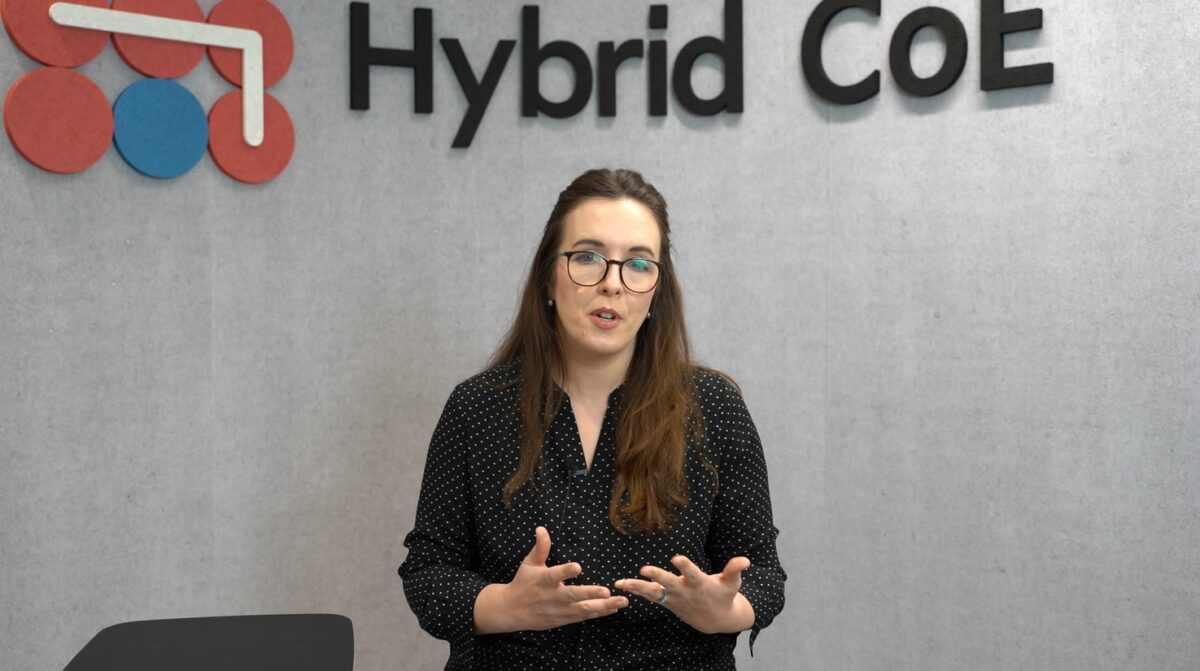
“Hybrid threat actors have sought to use multiple methods to undermine democratic processes, including vote buying, disinformation, deepfakes, and the use of artificial intelligence to streamline their capabilities,” explains Martha Turnbull, Director of Hybrid CoE’s Community of Interest on Hybrid Influence.
External and domestic actors use various tactics
Turnbull points out that threats to elections can come from both external and domestic actors and involve a range of tactics.
“Threat actors seek to undermine the integrity of democratic institutions by influencing public opinion and trust and creating discord. This includes hack-and-leak operations, cyber operations, covert social media campaigns, and the amplification of pre-existing local disinformation narratives,” says Turnbull.
These tactics have been visible in a number of high-profile cases, including the European Parliament elections in June 2024 and the Moldovan presidential election and EU referendum in the same year.
Martha Turnbull explaining what are hybrid threats to elections in a Youtube video: https://www.youtube.com/shorts/qm-DifzS_Es
AI plays a key role in election interference
One of the drivers of these malign activities is artificial intelligence (AI), which has made it easier and quicker to mass-produce content for information operations – a trend that is likely to intensify.
“The use of new technologies has already increased the volume of information operations, including the use of generative AI for audio, visual and text deepfakes. This activity occurs throughout the election cycle,” notes Turnbull.
Harassment and threats
Harmful harassment and physical threats, including in offline and online spaces, have been observed during elections.
“Activity tends to originate from domestic actors, although in some cases there have been suggestions of foreign state involvement,” Turnbull says.
These domestic actors can include ideologically motivated extremists, highly polarized party supporters and influencers, anonymous online users, and “lone actors” with grievances. Martha Turnbull notes that this activity tends to target women, LGBT+ communities, and ethnic minority communities.
Cyberattacks during election campaigns
In addition, increased cyberattacks, including distributed denial-of-service (DDoS) attacks, have been observed during several recent elections.
“Cyberattacks generally target political party and public websites during election campaigns. These attacks are often ‘opportunistic’ rather than directed at the election specifically. Attribution is usually very difficult,” Turnbull says.
Martha Turnbull explaining how to counter hybrid threats to elections in a Youtube video: https://www.youtube.com/shorts/eAP-GRzYRRI
Nine steps to mitigate hybrid threats to elections
While hybrid threats to elections are increasing and taking many different forms, effective measures exist to address them. The key is to recognize that protecting elections is a long-term effort requiring a whole-of-society approach.
“Election protection measures should exist throughout the whole electoral cycle and involve all relevant government agencies, as well as wider society. By working together, we can increase our collective resilience to threats to our democracies,” Turnbull says.
“It is also important to note that, despite their concerted efforts to influence the outcome of elections in the Euro-Atlantic, hybrid threat actors have had very little success,” she concludes.
Hybrid CoE promotes a nine-step programme to mitigate hybrid threats to elections, which is explained in more detail in Hybrid CoE Research Report 12, Countering hybrid threats to elections: From updating legislation to establishing collaboration networks. Some key takeaways can be found below.
Mitigating election interference – five key takeaways
- A strong and evolving legal foundation is required to tackle hybrid threats to elections. This should cover all aspects of election protection and be reviewed regularly.
- States should seek to identify weaknesses in their systems and implement measures to strengthen resilience through a whole-of-society response. Conducting regular exercises to test response mechanisms is important.
- Proactive communication with the media, politicians, civil society, and voters is critical. Information must be accurate and reliable.
- Cross-government election protection networks or taskforces can make a significant difference to a state’s ability to tackle threats throughout the electoral cycle. These networks bring the relevant entities together to share analysis and best practices, as well as to test response mechanisms.
- States must ensure that they can detect threats, respond to them, and restore normality as soon as possible. Monitoring the information environment is particularly important given the widespread threat from disinformation.
Read more:
- Hybrid CoE Research Report 12: Countering hybrid threats to elections: From updating legislation to establishing collaboration networks
- Hybrid CoE Paper 29: Artificial Intelligence and Foreign Information Manipulation: Chinese and Russian approaches
- Hybrid CoE Research Report 15: Countering disinformation in the Euro-Atlantic: Strengths and gaps