

In recent years, many countries have faced an increasing number and variety of hybrid threats aimed at undermining trust in elections and impeding the smooth running of electoral systems – and thus the functioning of democracy.
“Hybrid threat actors have sought to use multiple different methods to undermine democratic processes over the last 12 months, including vote buying, disinformation, deepfakes and leveraging artificial intelligence to streamline their capabilities. However, despite their concerted efforts to influence the outcome of elections in the Euro-Atlantic, the hybrid threat actors have had very little success,” noted Martha Turnbull, Director of Hybrid CoE’s Community of Interest on Hybrid Influence.
Looking beyond 2025
The Beyond 2025 Conference, hosted by Hybrid CoE on 2–3 December 2025 in Helsinki, brought together nearly 70 experts from Hybrid CoE’s Participating States and Moldova and Ukraine to address election-related hybrid threats.
The conference provided a platform for practitioners across the Euro-Atlantic to share their perspectives on recent threats to elections, including highlighting examples of best practice to protect against election interference.
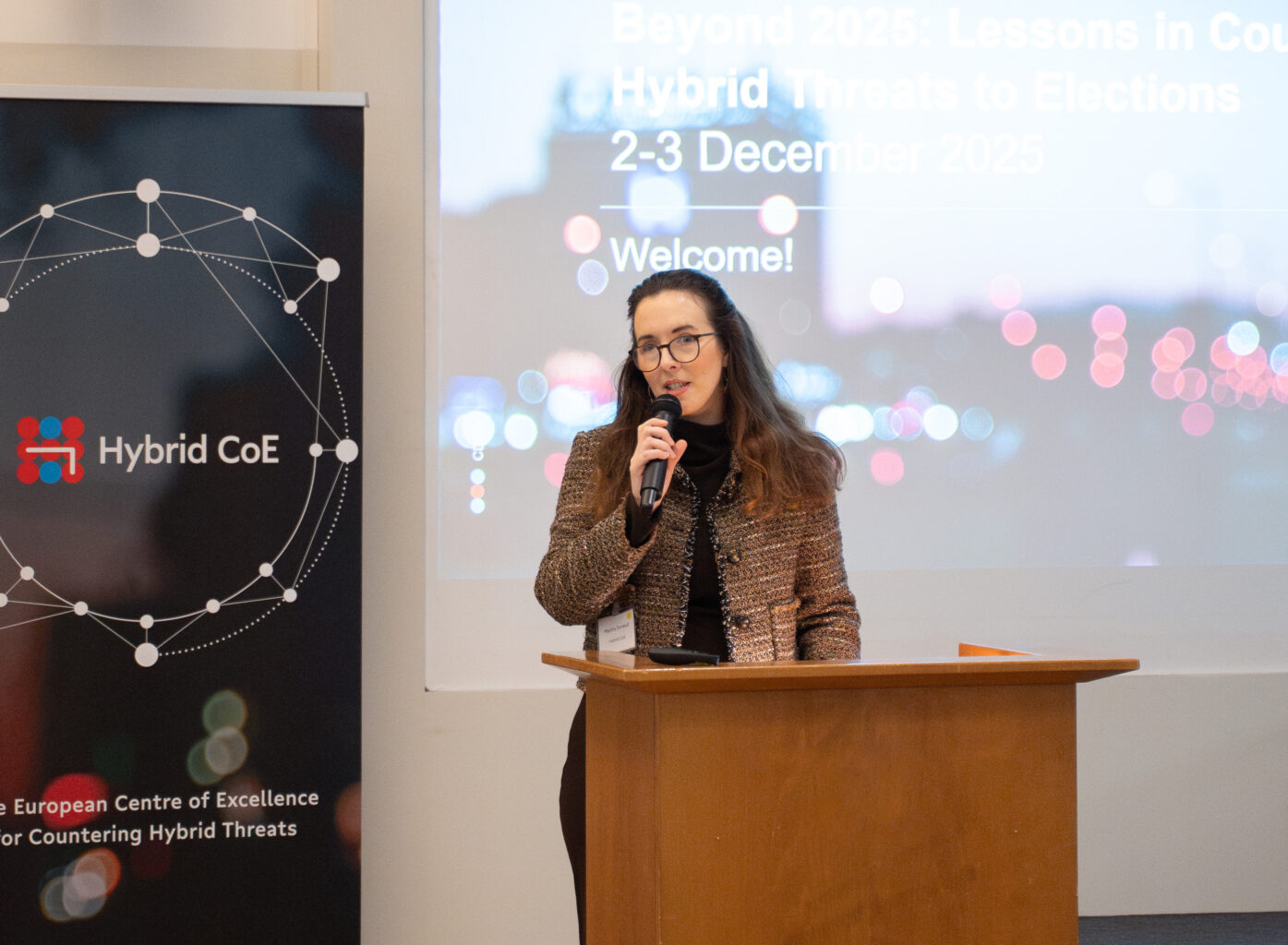
Photo: Hybrid CoE
According to Turnbull, despite continuing to face a diverse and growing range of threats, Hybrid CoE’s Participating States have successfully adapted their countermeasures to reduce the impact of hybrid threats on elections.
“There is, however, no room for complacency, and events like this conference bring the community together to identify future threats and response mechanisms,” Turnbull said.
Keeping pace with AI development
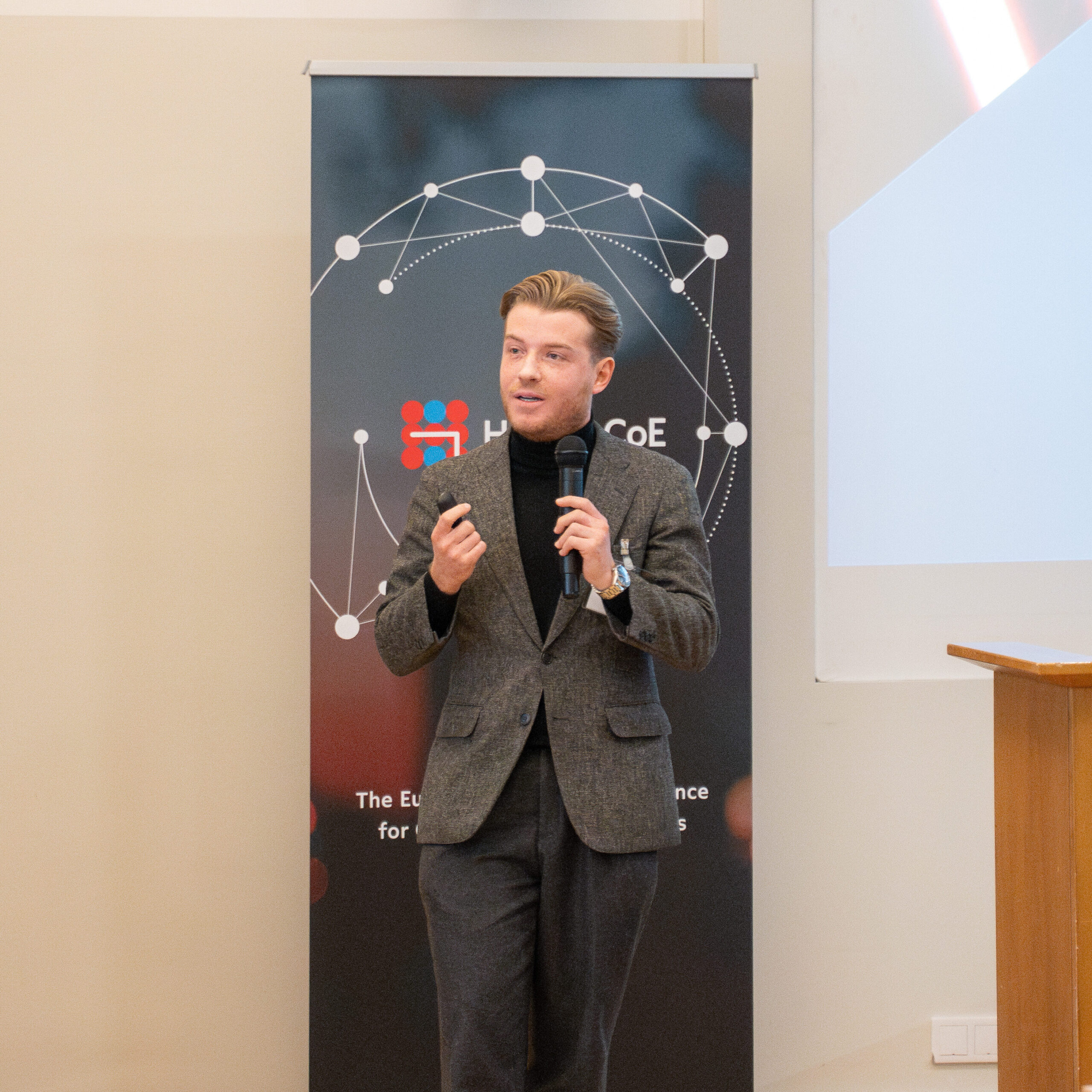
A prominent theme was the role of artificial intelligence (AI) in disinformation as part of election interference. Josef Lentsch from Partisan and Samuel Stockwell from the UK-based Centre for Emerging Technology and Security at the Alan Turing Institute provided timely insights into the evolving threat landscape.
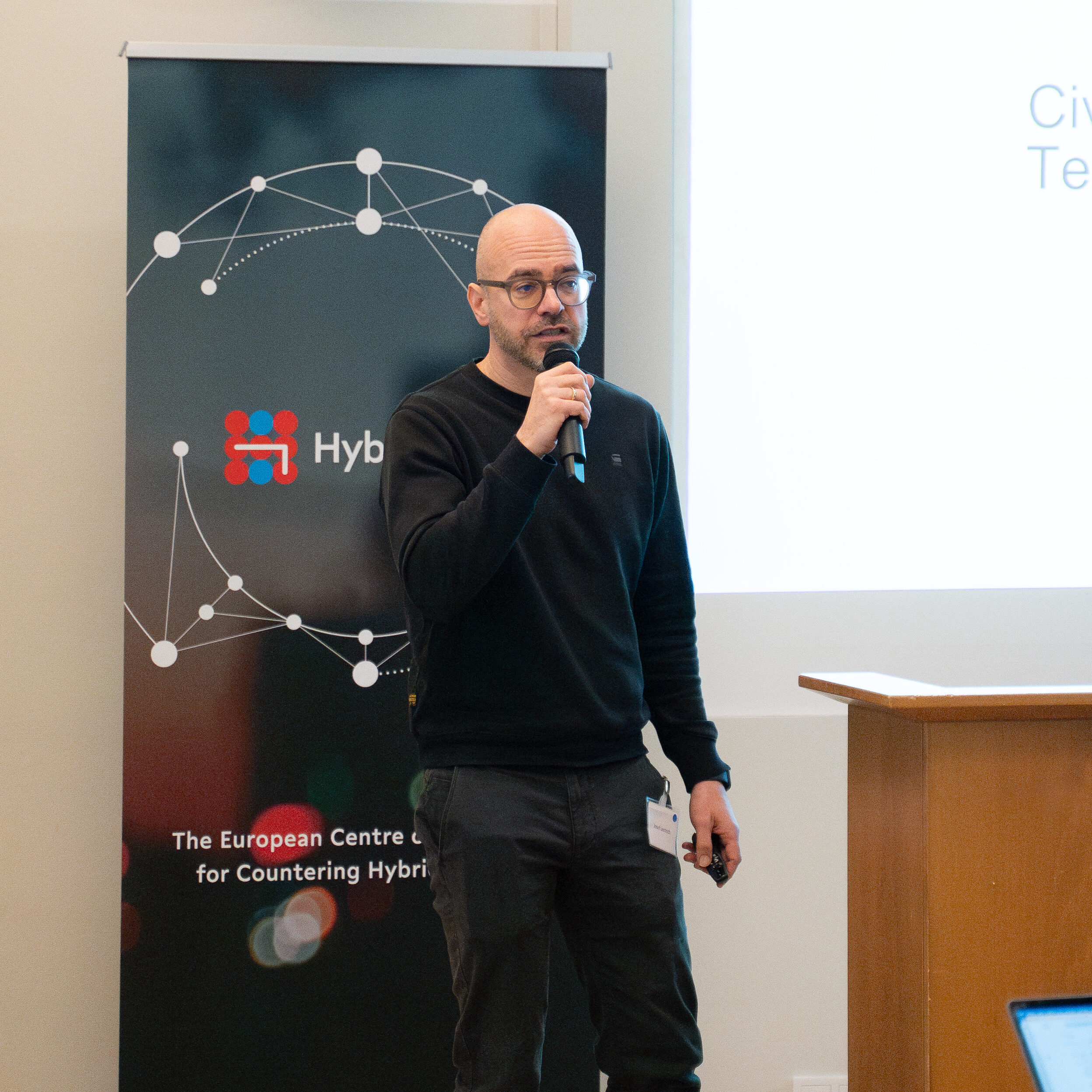
Photo: Hybrid CoE
Technology and Security at the Alan Turing Institute
Photo: Hybrid CoE
Josef Lentsch highlighted the risk that AI-driven hypertargeting of disinformation was fragmenting public debate. Coordination across the Euro-Atlantic was required to establish global norms for political AI ahead of the next election cycle. Samuel Stockwell noted that there was a lack of evidence to suggest that AI had affected the outcomes of recent elections, but that AI was instead exacerbating existing threats to democracies.
“Much of the current fear around AI threats to elections focuses narrowly on the impact on results or outcomes, but this is driven primarily by speculation,” said Samuel Stockwell.
“Instead, the evidence shows that we need to take a step back and consider the wider impact of AI on the very foundations of our democratic system – from intimidating politicians to blurring the lines further between reality and fiction,” he continued.
Building trust, resilience – and robust law enforcement
Preparation, resourcing and active countermeasures play a crucial role in countering hybrid threats, including election interference. The conference also highlighted the importance of sharing experiences and lessons learned: hostile actors often use similar methods, even if national responses may to some extent remain country-specific.
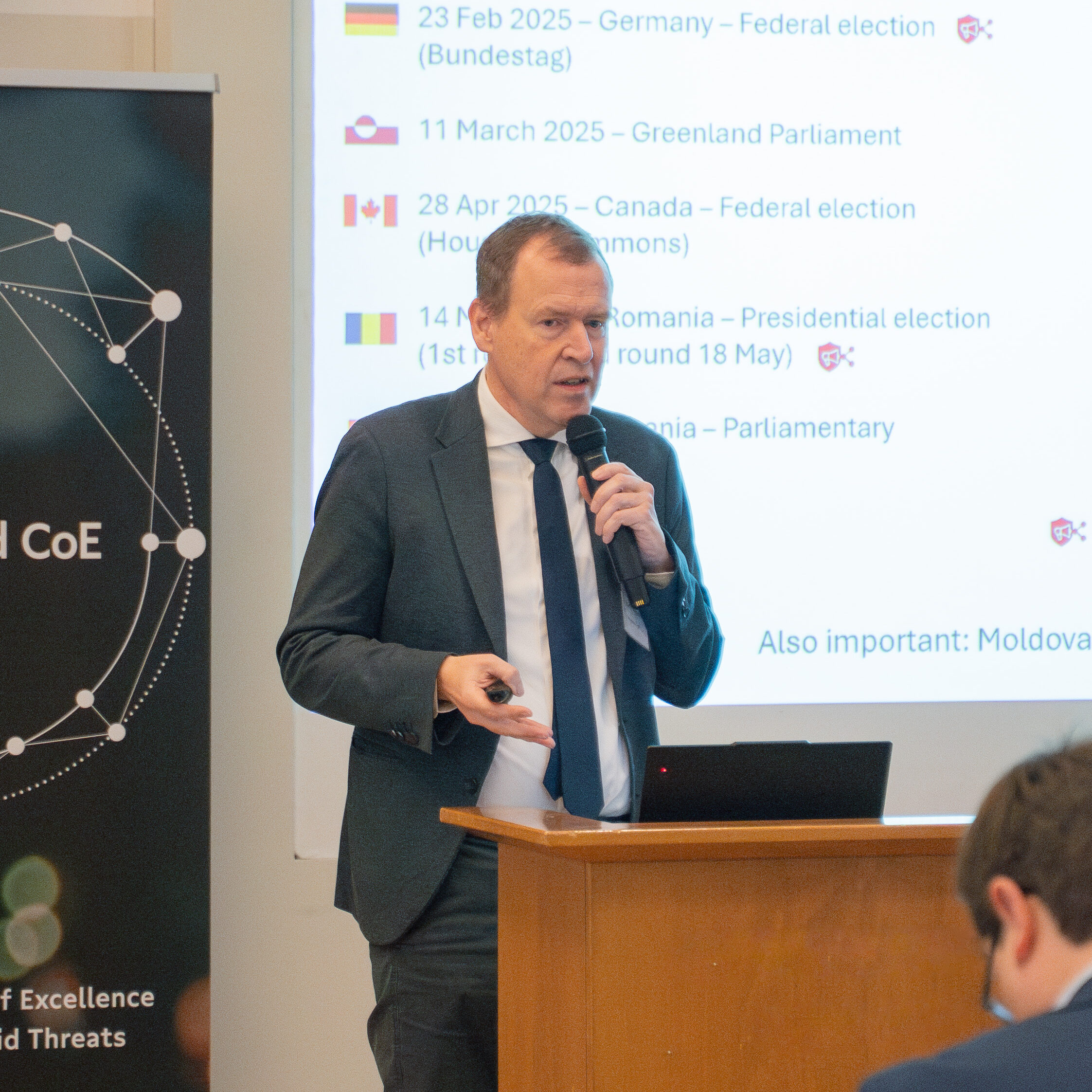
Photo: Hybrid CoE
In his speech Martin Ängeby, Senior Analyst at Hybrid CoE, emphasized three essential steps for safeguarding elections:
- Proactively build trust in elections
- Secure resilient technical electoral systems
- Ensure effective law enforcement before election day
“Monitoring threats isn’t enough; the threats should be neutralized. Protection measures need to be up and running well before election day,” Ängeby concluded.
Learn more:
Hybrid CoE:
The Alan Turing Institute: