

Defending Europe against hybrid warfare

Defending Europe against hybrid warfare is the outcome of joint efforts by the Joint Research Centre (JRC) and Hybrid CoE.

In an increasingly complex and challenging security environment, the escalation of hybrid threats into hybrid warfare poses a growing risk to European democracies. In this context, reliance solely on resilience is insufficient, and an effective deterrence scheme is necessary.

This study undertakes an in-depth examination of the European security environment’s structural transformation, revealing novel requirements for enhanced resilience and presenting conceptual opportunities for deterrence against hybrid threats. Furthermore, it presents a Resilience-Deterrence strategy (RD strategy) that combines proactive, active and reactive approaches.

While this study primarily focuses on the strategic level, it also proposes operational measures for resilience and countermeasures for deterrence, thereby offering a holistic framework for implementation.

Read the Executive summary (pdf) here.

Countering disinformation in the Euro-Atlantic: Strengths and gaps

Russia renewed its daily ongoing information aggression in 2013–14 in connection with the Revolution of Dignity and the annexation of Crimea, which generated heightened demand for countermeasures across the Euro-Atlantic. This Hybrid CoE Research Report presents the results of a questionnaire sent to Hybrid CoE’s Participating States, the EU and NATO to map their counter-disinformation tools and policies; and qualitative insights based on the discussions of an annual workshop organized by Hybrid CoE.

While many good counter-disinformation measures are in place across the Euro-Atlantic region, the data from the questionnaires show that many practitioners in EU and NATO countries believe their counter-disinformation work is under-resourced. Moreover, there seems to be a lack of established mechanisms for cooperation between the authorities and the non-governmental sector. While many countries are implementing tools to raise awareness of disinformation, they are doing less to limit or punish the perpetrators.

Hybrid CoE’s qualitative and quantitative analysis shows that a few countries are using innovative tools to counter disinformation, and this could serve as an inspiration for the rest of the community: examples and case studies are included throughout this report.

Protecting maritime infrastructure from hybrid threats: legal options

As incidents in the Baltic Sea demonstrate, protecting submarine communication cables is vital. This Hybrid CoE Research Report examines the legal options available to states for countering hybrid threats against maritime infrastructure. The report shows that while international law provides a range of options for states to maintain situational awareness of hybrid threats, it is much more limited in the operational area, where significant gaps remain. The report concludes by recommending several steps to strengthen the ability of states to legally protect their critical maritime infrastructure.

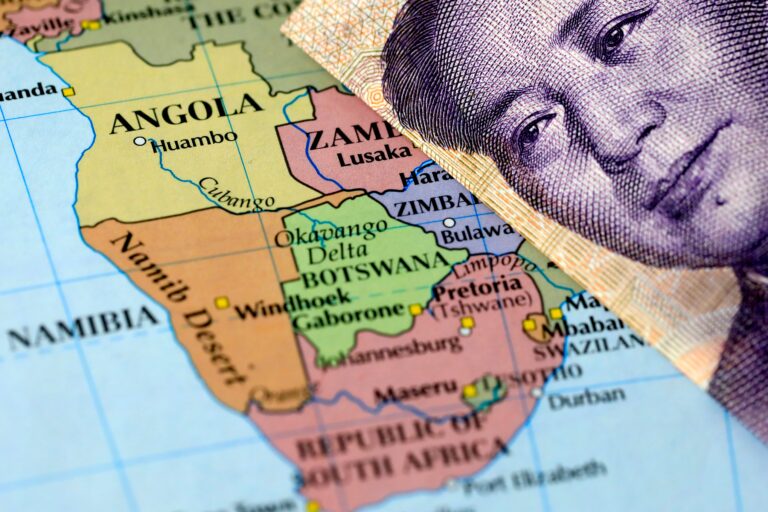
Strings attached: China’s narrative influence in Sub-Saharan Africa

Drawing on extensive research conducted by Hybrid CoE between 2021 and 2024 in close cooperation with the Finnish Ministry for Foreign Affairs, this Hybrid CoE Research Report meticulously maps the extent of China’s narrative influence in Sub-Saharan Africa. It analyzes China’s policy of “narrative warfare” against Euro-Atlantic interests in Africa and how this is pursued through the co-optation of local elites, the creation of economic dependencies, and control of media and technology infrastructure, among other means. The authors highlight how these activities contribute to the undermining of democratic processes and the proliferation of anti-Western sentiments in Sub-Saharan Africa.

Hybrid CoE Research Report 12: Countering hybrid threats to elections: From updating legislation to establishing collaboration networks

This Hybrid CoE Research Report provides a thorough analysis of hybrid threats to elections, with a focus on physical attacks, disinformation campaigns, and cyberattacks that pose a threat to the integrity of democratic processes. The report recommends updating legislation to address emerging threats; assessing and mitigating weaknesses in election infrastructure; actively engaging media and politicians to counter disinformation; and establishing robust collaboration networks for rapid threat detection and response. According to the analysis, these defence strategies must be implemented urgently to protect electoral integrity and bolster public confidence in democratic processes.

Hybrid CoE Research Report 11: How Ukraine fights Russian disinformation: Beehive vs mammoth

This Hybrid CoE Research Report focuses on Ukrainian best practices in countering disinformation, mainly in the period following Russia’s February 2022 full-scale invasion of Ukraine. The report stresses the importance of efforts such as laying a solid foundation for the counter-disinformation work and dedicating substantial resources to it; being adequately prepared for possible hostile narratives; using humour against disinformation; and punishing the disinformers. In addition, it urges the West to catch up with Ukraine in countering disinformation.
Hybrid CoE Research Report 10: Preventing election interference: Selected best practices and recommendations

This Hybrid CoE Research Report presents a comprehensive overview of the best practices implemented to safeguard electoral processes in the European Union and NATO countries. The study focuses on selected Hybrid CoE Participating States and also draws on the experiences of two countries that are on the frontline of foreign interference activities, namely Ukraine and Taiwan. The research shows that in most countries, election interference is more often directed at voters, seeking to influence their decisions, rather than direct attacks on election infrastructure to manipulate the vote count. 

Hybrid threats: A comprehensive resilience ecosystem

To help counter hybrid threats and support policymakers in defending their democratic societies, Hybrid CoE and the European Commission’s Joint Research Centre have constructed a model suggesting a framework for rethinking resilience comprehensively. The Comprehensive Resilience Ecosystem (or CORE) model presented in this joint report highlights two factors when we think about a response: Firstly, open societies are ever more connected within and between one another. Secondly, any response should involve the whole of society to counter threats effectively. To this end, the presented model addresses different “spaces” of society (governance, civic, and services), as well as different “levels” (international, national, and local) and, most importantly, their mutual interactions.

Hybrid Threats A Comprehensive Resilience Ecosystem – Executive Summary

Hybrid CoE Research Report 9: China’s hybrid influence in Taiwan: Non-state actors and policy responses

Taiwan is a primary target of and a testing ground for China’s hybrid aggression. This Hybrid CoE Research Report focuses on China’s influence on non-state actors, which play a key role in China’s hybrid threat strategy in Taiwan. The report points out that even though China has intricate knowledge of Taiwan’s domestic affairs, Taiwan has successfully resisted hybrid influence, drawing both on civil society and government resources. A democratic system in Taiwan is a nuisance to the Communist Party’s narrative claiming that Chinese authoritarianism is indispensable. Thus, experiences from Taiwan can also help to counter China’s hybrid influence elsewhere.

Hybrid CoE Research Report 8: Russia and China as hybrid threat actors: The shared self-other dynamics

This Hybrid CoE Research Report sheds light on what drives Russian and Chinese hybrid threat activities, i.e., malign activities that remain under the threshold of conflict escalation. The report does this by analysing Russia’s and China’s authoritarian systems, strategic cultures, aligning and non-aligning interests, and vulnerabilities, thus comparing their strategic intentions. The report argues that present and past commonalities in the shared understanding of self and the other, including domestic exceptionalism and international grievances, provide legitimacy for Russian and Chinese authoritarian rule domestically, and coercive, sub-threshold measures internationally.
Hybrid warfare
Hybrid CoE Research Report

Defending Europe against hybrid warfare

Feature picture of the Hybrid CoE Research Report 15

Disinformation
Hybrid CoE Research Report 15
Countering disinformation in the Euro-Atlantic: Strengths and gaps

Maritime
Hybrid CoE Research Report 14

Protecting maritime infrastructure from hybrid threats: legal options

China
Hybrid CoE Research Report 13

Strings attached: China’s narrative influence in Sub-Saharan Africa

Election interference
Hybrid CoE Research Report

Hybrid CoE Research Report 12: Countering hybrid threats to elections: From updating legislation to establishing collaboration networks

Disinformation
Hybrid CoE Research Report

Hybrid CoE Research Report 11: How Ukraine fights Russian disinformation: Beehive vs mammoth

Election interference
Hybrid CoE Research Report

Hybrid CoE Research Report 10: Preventing election interference: Selected best practices and recommendations

Resilience
Hybrid CoE Research Report

Hybrid threats: A comprehensive resilience ecosystem

China
Hybrid CoE Research Report

Hybrid CoE Research Report 9: China’s hybrid influence in Taiwan: Non-state actors and policy responses

China
Hybrid CoE Research Report

Hybrid CoE Research Report 8: Russia and China as hybrid threat actors: The shared self-other dynamics

Disinformation
Hybrid CoE Research Report

Hybrid CoE Research Report 7: Foreign information manipulation and interference defence standards: Test for rapid adoption of the common language and framework ‘DISARM’

Non-state actors
Hybrid CoE Research Report

Hybrid CoE Research Report 6: Hybrid threats from non-state actors: A taxonomy

Middle East and North Africa (MENA)
Hybrid CoE Research Report

Hybrid CoE Research Report 5: Hybrid threat activity in the MENA region: State and non-state actors seeking status and expanding influence

Arctic region
Hybrid CoE Research Report

Hybrid CoE Research Report 4: Security and hybrid threats in the Arctic: Challenges and vulnerabilities of securing the Transatlantic Arctic

Lawfare
Hybrid CoE Research Report

Hybrid CoE Research Report 3: Hybrid threats and the law: Building legal resilience

Disinformation
Hybrid CoE Research Report

Hybrid CoE Research Report 2: Effective state practices against disinformation: Four country case studies